

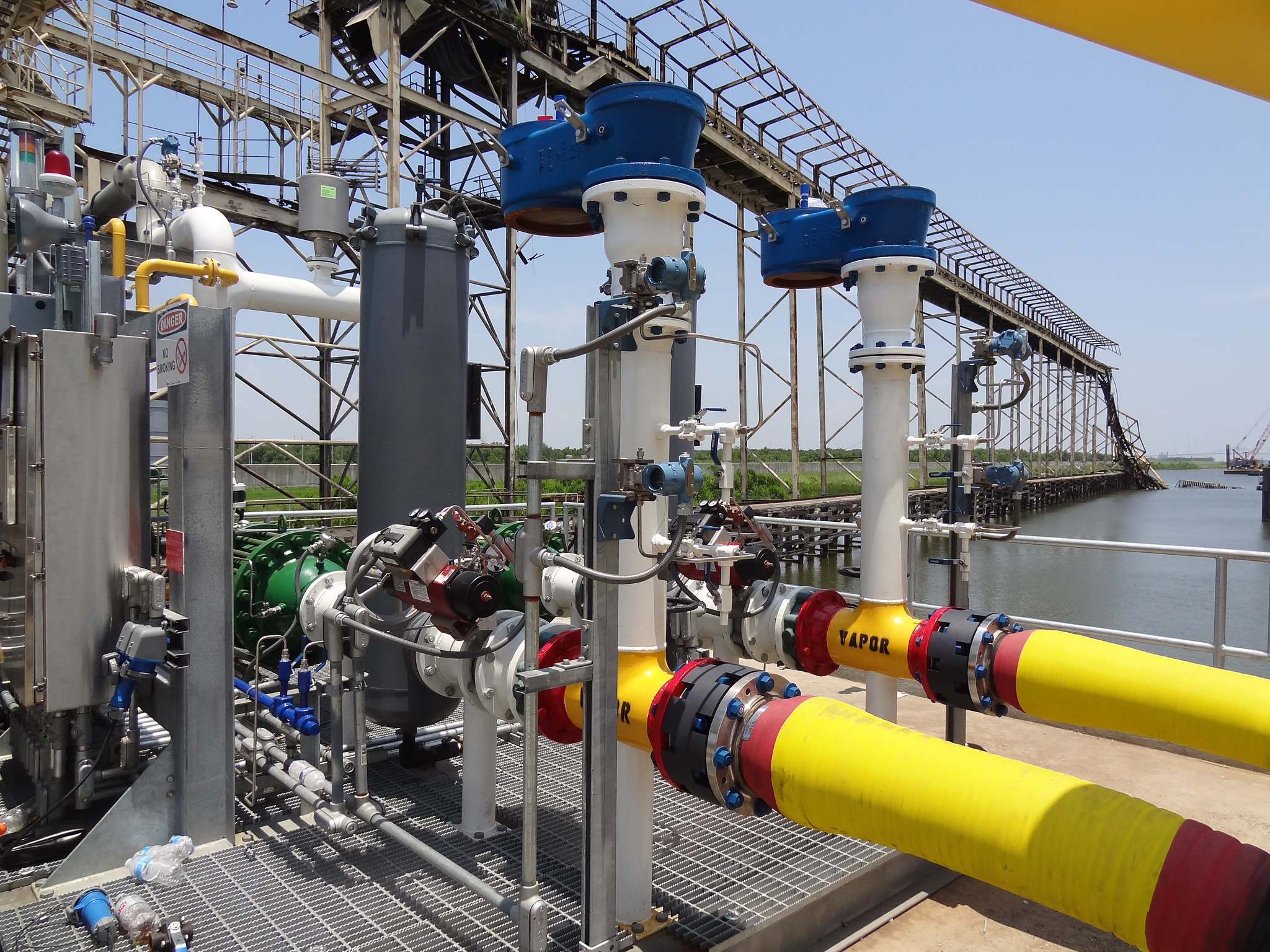
It’s an interesting time to be a terminal operator! You’re facing some pretty unprecedented pressures in today’s energy market. With crude prices hovering around $100 per barrel and global supply chains stretched thin, demand and scarcity are pushing a lot of midstream facilities past their limit, and not everyone is rising to the opportunity of the moment. Too many operators are being held back by pipes and equipment that are simply too slow for the delivery schedules required!
Bottom line? Terminals that can’t achieve high velocity marine loading rates are losing substantial revenue opportunities. The difference between fast, efficient operations and slow, sluggish performance right now could determine which businesses survive this market.
Why 30,000 BPH Matters
What we’re seeing is that the 30,000 barrels per hour benchmark has emerged as the new standard for the busiest, most in-demand marine loading operations in North America. This threshold reflects the minimum flow rate required to efficiently service modern vessels while maximizing berth utilization during peak demand periods.
Consider the current financial impact of hitting this mark consistently. The math is pretty simple: A terminal loading at 30,000 BPH can potentially double its revenue per berth cycle over one constrained to 15,000 BPH or fewer, for example. It doesn’t take an engineer to know that when tankers queue at your facility, loading speed directly correlates with profitability. Faster operations mean more vessel cycles, higher throughput, and improved customer satisfaction.
Current Market Conditions Drive Velocity Requirements
Several factors in Summer 2026’s wild energy landscape have intensified the demand for high-velocity marine loading:
- Supply Chain Constraints: Global disruptions make rapid vessel turnaround critical for maintaining supply security. Terminals offering quick loading become preferred partners for major oil companies and commodity traders.
- Price Volatility: When markets fluctuate hourly, completing loading operations rapidly allows operators to capture optimal pricing before conditions shift. Speed provides trading flexibility that slow facilities cannot match.
- Vessel Economics: Today’s larger ships require proportionally higher loading rates to maintain economic viability. A VLCC waiting multiple days for loading at low flow rates generates losses compared to same-day completion at high velocity.
Is your marine loading facility set up to capitalize on this moment? Or are your profits capped out? No matter what challenges you’re facing, Aura Engineering can give you the tools to boost throughput significantly!
Engineering Challenges in High-Velocity Marine Loading Operations
Reliable 30,000+ BPH marine loading demands engineering that can address multiple technical requirements at once:
- Hydraulic Systems: Pump configurations must maintain consistent pressure across massive flow volumes. Inadequate hydraulic design causes cavitation, energy waste, and premature equipment failure.
- Manifold Engineering: Loading arms and manifold systems become bottlenecks without proper sizing and pressure management. High-velocity operations require precision engineering to eliminate flow restrictions.
- Vapor Management: At 30,000 BPH, vapor generation increases exponentially. Marine loading systems need integrated vapor recovery capable of handling these volumes while maintaining environmental compliance.
- Safety Integration: Simply put, higher flow rates amplify failure consequences. Emergency shutdown systems, fire suppression, and containment must scale with increased flow velocity.
Our Proven Track Record in Marine Loading Engineering
For three decades now, Aura Engineering has delivered complex loading terminal engineering solutions for chemical and petrochemical facilities throughout North America. Our extensive marine-loading project experience is why operators select us for critical expansions: Our team has engineered marine loading systems achieving 30,000+ BPH for multiple facilities.
We do it by applying proven engineering principles that distinguish safe, efficient high-velocity projects from problematic installations. From the initial design to final on-site testing, Aura Engineering provides comprehensive system integration. We provide everything your facility needs, from pump specification through control design and USCG compliance documentation.
As longtime market innovators, we know too well that capital project schedules can directly impact your ability to capture immediate market opportunities. Fortunately, our efficient engineering processes and established vendor networks accelerate delivery while maintaining quality standards. All marine loading facilities have to satisfy complex USCG requirements under 33 CFR 154. Our compliance experience ensures high-velocity systems meet regulatory standards from initial operation.
Why Waiting Costs Money
In current market conditions, postponing marine loading capacity improvements could mean abandoning immediate revenue. Each month that your facilities operate below 30,000 BPH capability, competitors with superior loading terminal engineering will capture more market share that may prove difficult to recover.Contact Aura Engineering today for a free consultation to learn how our loading terminal engineering capabilities can help achieve 30,000 BPH performance.